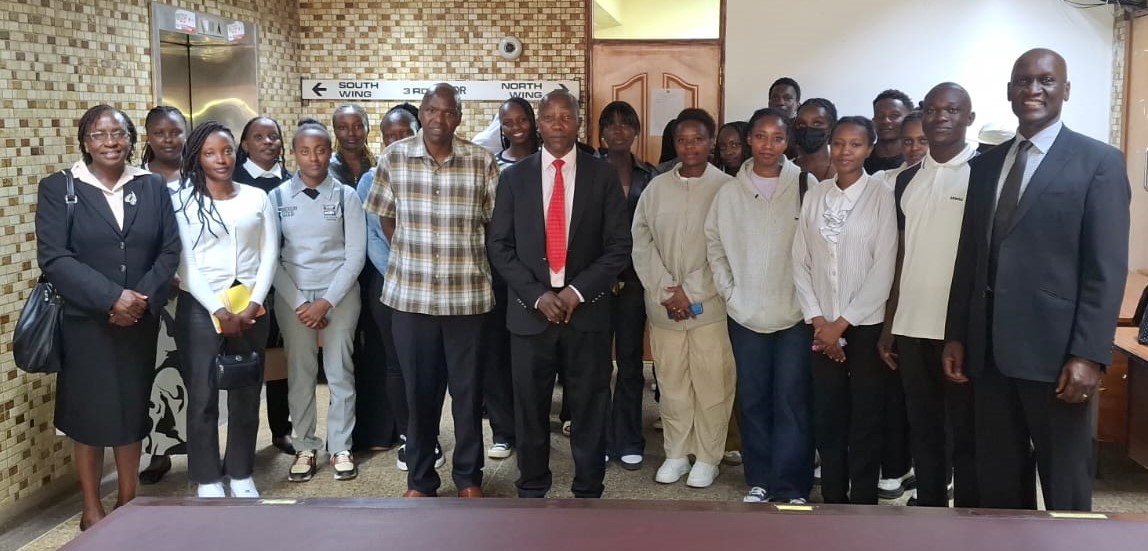
National Disaster Operations Centre Hosts Students from Egerton University
The National Disaster Operations Centre (NDOC) on 17th February, 2026, hosted a delegation of psychology students from Egerton University in an educational visit aimed at deepening their understanding of disaster management and its psychological dimensions.
The students were taken through an engaging and insightful presentation delivered by Col (Rtd) Francis E. Emathe, Deputy Director of NDOC. The session provided a comprehensive overview of Kenya’s disaster preparedness and response framework, highlighting the crucial role played by NDOC in safeguarding lives, property, and the environment.
Objectives of the Presentation
The interactive session was structured to achieve the following objectives:
Explore Kenya’s Disaster Risk Management (DRM) Structures
Students were introduced to the national disaster management architecture, including coordination mechanisms at both national and county levels.Present NDOC’s Organizational Mandate and Operational Environment
The Deputy Director outlined NDOC’s core mandate, which includes coordination of disaster response, information management, resource mobilization, and multi-agency collaboration across the Disaster Risk Management cycle—prevention, preparedness, response, and recovery.Highlight Common Hazards in Kenya
The presentation examined recurrent hazards affecting the country, such as floods, droughts, landslides, fires, disease outbreaks, and other emergencies. Students gained insights into how these hazards impact communities socially, economically, and psychologically.Examine NDOC’s Interplay with Disaster Psychology
Given the students’ academic background in psychology, special emphasis was placed on the psychological aspects of disasters. Discussions covered trauma response, mental health interventions, community resilience, and the importance of psychosocial support during and after emergencies.
NDOC’s Role in National Disaster Coordination
NDOC plays a central role in coordinating national disaster risk management across the entire Disaster Risk Management (DRM) cycle. As the government’s focal point for disaster response coordination, the Centre ensures timely information sharing, inter-agency collaboration, and rapid mobilization of resources during emergencies.
Through partnerships with government ministries, security agencies, humanitarian organizations, and county governments, NDOC works to enhance preparedness levels and strengthen national resilience against both natural and human-induced disasters.
Strengthening the Link Between Academia and Practice
The visit underscored the importance of bridging academic learning with real-world application. By engaging directly with NDOC professionals, the students gained practical insights into how theoretical concepts in psychology apply within disaster contexts. The interaction also allowed for meaningful dialogue on how future psychologists can contribute to disaster response efforts, particularly in trauma management and community recovery programs.
Conclusion
The visit by Egerton University psychology students to NDOC was not only educational but also transformative. It highlighted the growing importance of interdisciplinary collaboration in disaster management, particularly the integration of psychological expertise into emergency response frameworks.
NDOC reaffirmed its commitment to fostering partnerships with learning institutions as part of its broader strategy to enhance public awareness and capacity building. By opening its doors to students and researchers, the Centre promotes a culture of preparedness, informed citizenship, and shared responsibility in addressing national disasters.
Such engagements play a critical role in shaping the next generation of professionals who will contribute to building a safer and more resilient Kenya. NDOC encourages similar visits from universities and other learning institutions to create greater awareness of its mandate, deepen understanding of the hazards facing the country, and inspire innovative solutions to disaster risk management challenges.
Through continued collaboration between academia and national institutions, Kenya strengthens not only its disaster response systems but also its collective resilience as a nation.